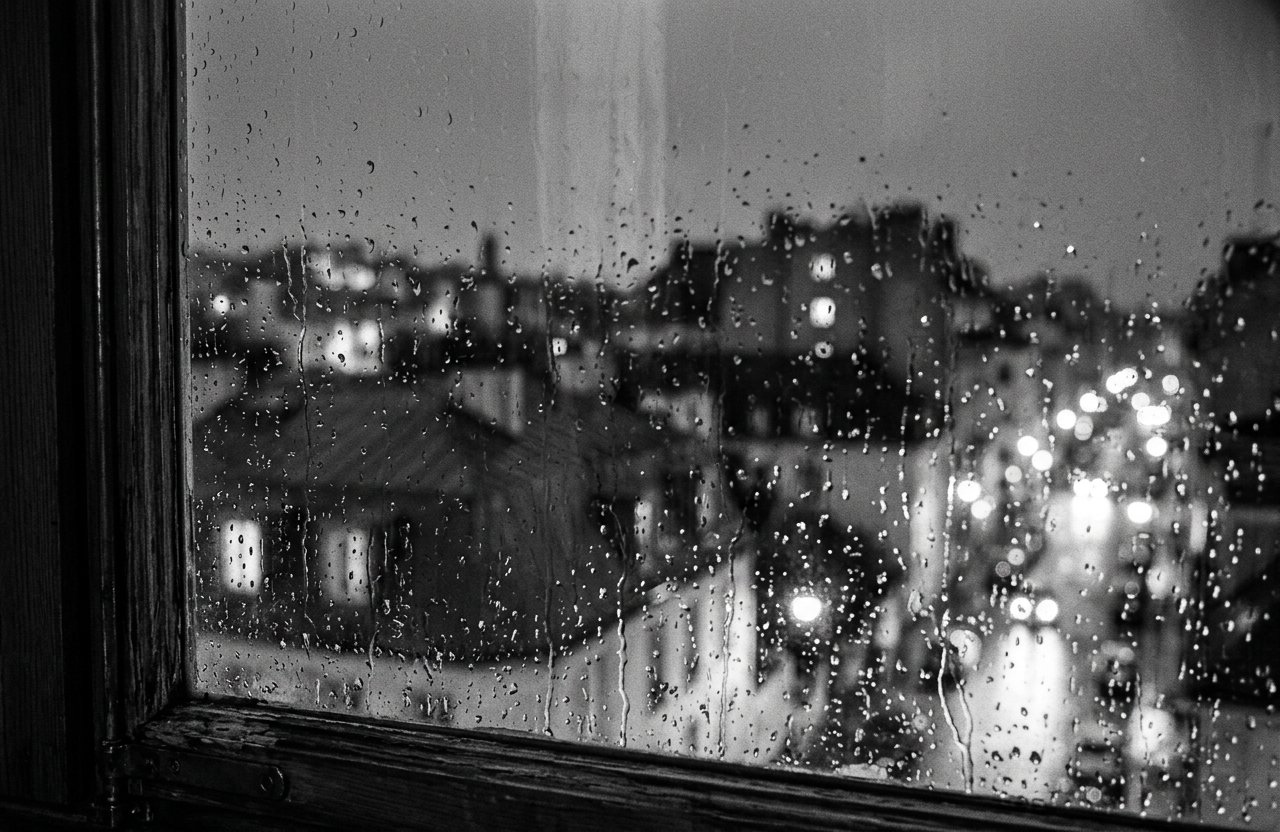
The rain came sideways off the water, the way it always does in Voisery, where the streets were drawn by someone who lost an argument with the wind. Olena counted nine gutters overflowing between the harbor and the house on Marsh Lane, and gave each one a name she would later deny. The ninth she called Hollis, because it refused to carry anything anywhere, and just stood there in the road, brimming.
She had a key to the keeper’s house and no right to it. Both facts sat in her coat pocket like two stones from the same beach. The letters had been hers to sort, that was the official part — the widow had hired her in spring, back when the town still spoke about the lighthouse in the present tense. Sort the correspondence. Keep the useful envelopes. Burn the rest. It was the burning that had turned her into a thief, although technically she had only failed to burn.
Rain recorded everything that day and testified to nothing. It ticked in the downspouts, wrote its shorthand on the windows, and kept the harbor so soft-edged that the boats looked like revisions of themselves. Olena stood on the keeper’s porch for the length of one cigarette she did not light, because Hollis had quit in March and she had decided, without telling anyone, to quit in solidarity.
Inside, the house did what empty houses do in coastal towns: it kept the weather’s minutes. The smell was of cold iron and old glue. Forty-one drawers, she had counted once, and every drawer held letters — some addressed, most merely aimed. She had read perhaps a hundred. She had kept two hundred and six. The arithmetic of her honesty was not complicated, but it did not flatter her either.
The last letter Hollis wrote before walking out of the lighthouse was not to her. She knew this the way you know a staircase in the dark — by the number of times she had hoped otherwise. It was addressed, in his unhurried clerk’s hand, to The Undersigned. No name. No street. Voisery had never needed one.
